<
Back to design
Uniandes new website
Client:
Universidad de los Andes
Role:
UX/UI Designer
Tools and Skills:
Figma, UI Design, user research, usability testing, information architecture
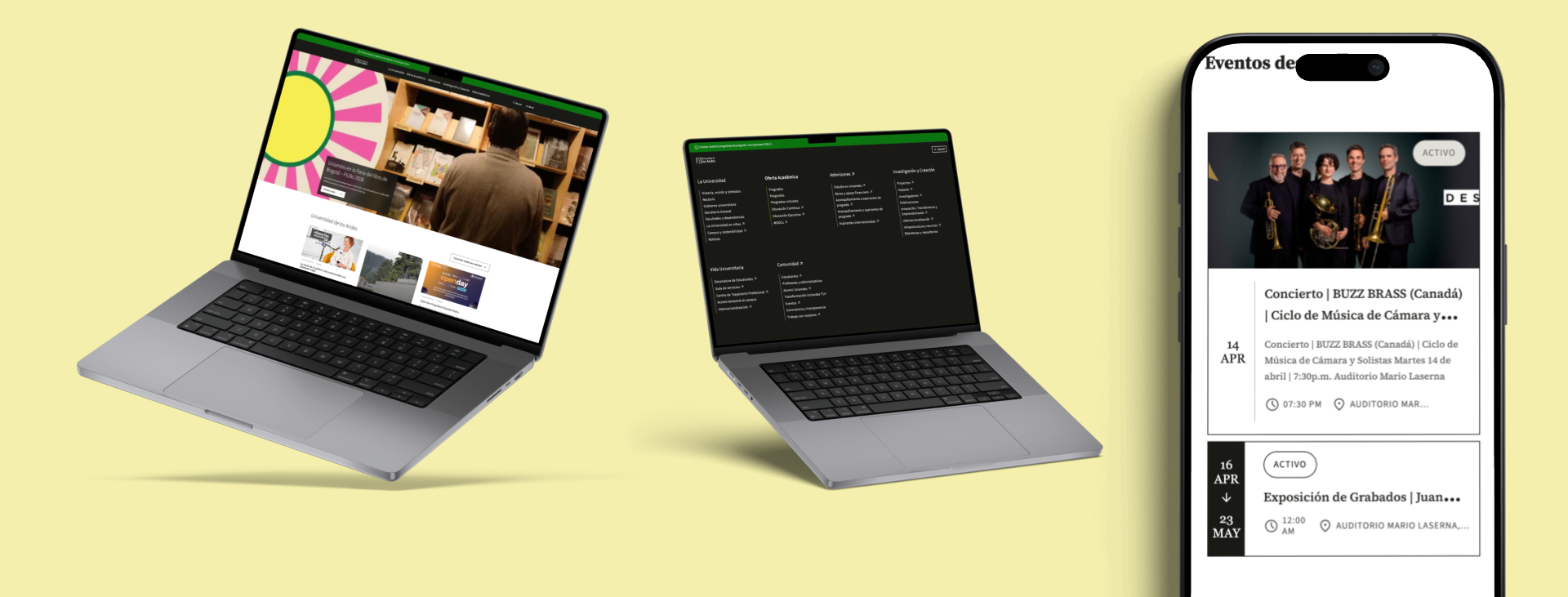
Using the newly shipped design system as a foundation, we were tasked with redesigning the Universidad de los Andes main website. Early on we identified a larger problem: the university had built its web ecosystem in silos, each administrative unit making independent decisions that fragmented the experience for users. We saw the opportunity to reduce the number of sites within the domain and consolidate them into a single, coherent experience.
The redesign wasn't a visual refresh. It was a complete restructuring of the information architecture, robust enough to absorb all administrative units without losing clarity or consistency.
Methodology
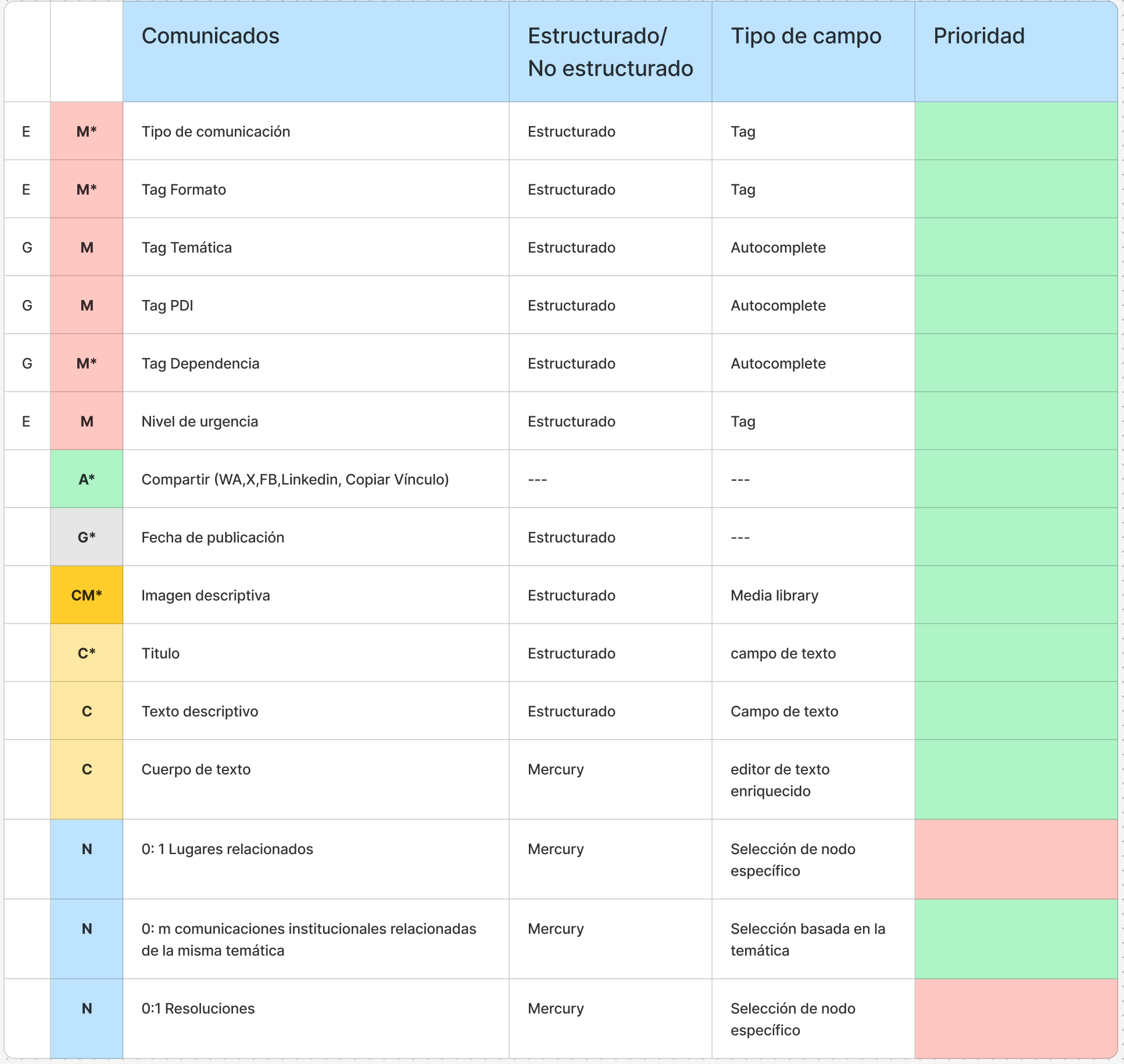
We used OOUX (Object-Oriented UX) to structure how content would be created, reused, and related across the site. The methodology borrows the object metaphor familiar to developers: content types are defined by a fixed set of attributes that describe them and determine how they appear across contexts. This gave us a shared vocabulary with developers and stakeholders that made conversations faster and decisions more grounded.
Each object was mapped using a color system:
- Red — metadata describing the content
- Yellow — unique attributes
- Green — calls to action
- Blue — nested objects
Benchmark
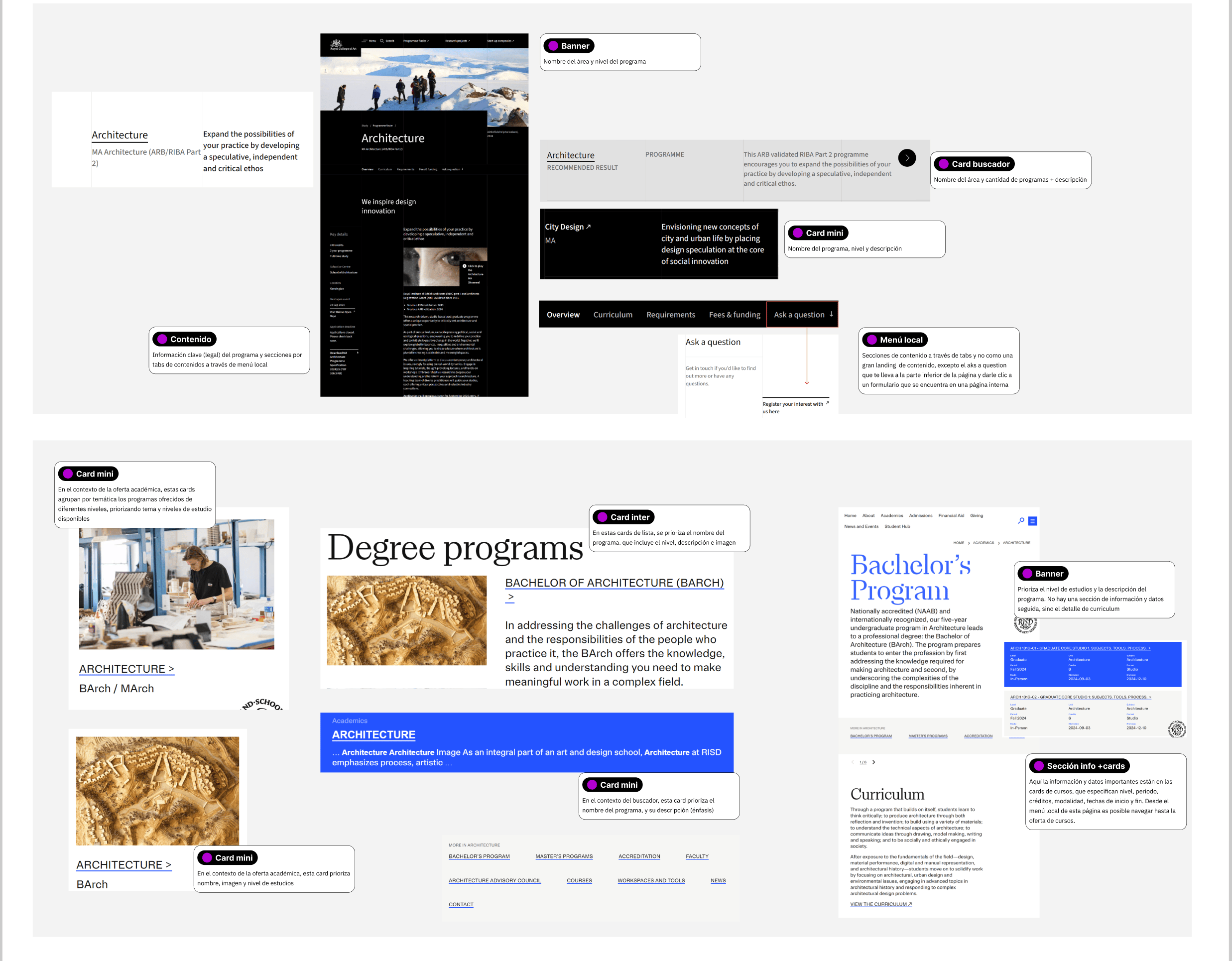
We analyzed how leading universities were approaching their websites — across visual design, interaction design, and architecture — to identify patterns worth adopting and conventions worth challenging. One concrete outcome was a redesigned search experience with a new search bar and engine, giving users a reliable way to find information across a now much larger unified site.
Outcome
The redesign produced results at every layer. The CMS became significantly easier to manage. Design system components were directly integrated, reducing the overhead for site administrators and making consistency the default rather than the exception.
Nine previously independent sites were consolidated into the main Uniandes domain, giving students and prospective candidates a single, coherent platform instead of a fragmented ecosystem. The most tangible human impact was on the call center: agents could now guide prospective students through the application process and financial aid with predictable, reliable information, because the answers were finally all in one place.